

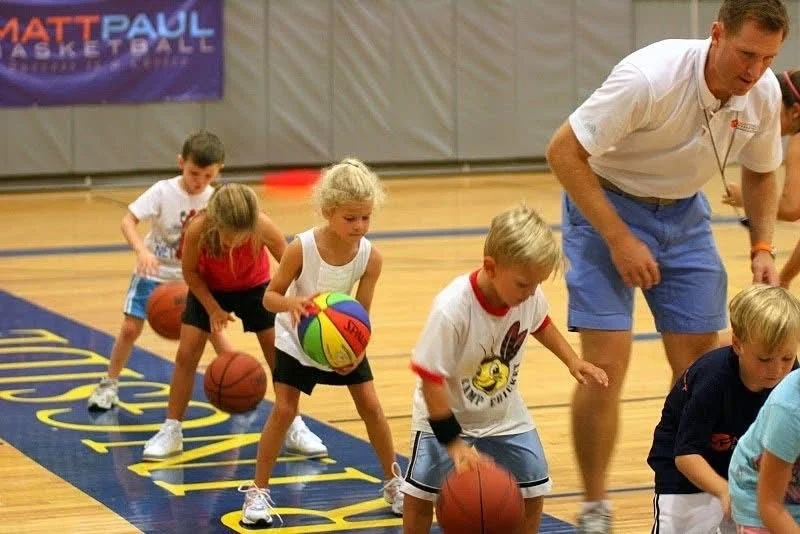
I've spent 32 years coaching basketball in Philadelphia. Thirty-two years in gyms across this city, from Center City and Chestnut Hill to Springhouse and King of Prussia.
One lesson keeps showing up: kids don't all learn the same way. They don't all walk into the gym carrying the same day, either.
Winter is here. Our MP Skills & Games sessions are running at SCH Academy, and the theme for the season is simple: Play Fearlessly. Play like a Dawg.
Here's what that means to us. A Dawg does the little things daily, wants to be coached, and plays with freedom. Mistakes are part of the deal. Hesitation isn't.
But a kid only plays fearlessly if they trust the person coaching them.
A player might be nervous. Tired from school. Quiet because this is their first time in a gym. A family might be new to the area. A kid might have been cut somewhere else and be wondering if they belong here.
That's why coaching starts before the whistle. Before the cones. Before the first rep.
Any coach can run a drill. Intentional coaching starts by understanding the kid in front of you.
01: Know the player. Before you teach the play.
The gym can be loud. A kid's reason for being quiet can be hard to see.
So I watch first.
Does the player look comfortable asking a question? Do they jump into the drill or wait to see what everyone else does? When they miss a layup, do they grab the ball and try again, or look straight at the coach?
Small things. Useful things.
If a seven-year-old can't see me through a crowd, I'll get down to their eye level. If a player shuts down after a public correction, I'll give the next coaching point privately. If a kid looks frustrated, I might ask, "What's going on?" before I ask for another sprint.
Sometimes the answer is basketball. Sometimes it isn't.
I don't need every detail of a player's life. I do need to pay attention. A rough day doesn't change the standard. But it can change how I help a player reach it.
That's part of what makes youth basketball in Philadelphia more than a schedule of practices and games. These are kids from different neighborhoods, schools, and family situations, sharing the same court. Coaching well means treating each one like an individual.
02: Teach the kid in front of you. Show it. Say it. Let them try.
One player needs to see the footwork. Another needs one clear cue: "Plant your outside foot." A third understands it only after trying, missing, and feeling the adjustment.
So I use more than one way to teach.
Show it. Say it. Let them try it.
I might demonstrate a defensive closeout. Then explain, "Short steps as you get there. Hands up." Then let the player go live against a ball-handler. If they're still struggling, I watch what happens before I decide what to change.
The point isn't to sort kids into permanent "visual" or "hands-on" boxes. Kids are more complex than that. The point is simpler: notice what helps this player, with this skill, right now.
If I only talk, I leave too many kids out. If I only demonstrate, some players may need a clearer cue. If I never let them experiment, they don't get to feel the skill for themselves.
A good coach has more than one gear. Keep the instruction short. Give the kid a chance to act on it. Let the next rep tell you what to do next.
That approach lines up with the guided-discovery approach to teaching children's motor skills: create a useful challenge, guide the player with questions and feedback, and give them room to solve the problem.
03: Keep the standard. Change the delivery.
Understanding a player does not mean lowering expectations.
We still expect effort. We still expect listening when a coach is talking. We still expect a player to own a turnover, sprint back on defense, and treat teammates with respect.
Firm with love. No confusion about either part.
The difference is in how the correction gets delivered. I watch how a kid responds before deciding how to coach the next moment. Does a quick cue help? Does a demonstration make it click? Would one private word land better than a public callout?
For one player, it might be: "You're drifting on your shot. Hold your balance and finish." For another, I may show the footwork first. For a third, I might ask, "What did you feel on that rep?"
Same standard. A useful correction. A chance to respond.
That's the work behind good basketball training in Philadelphia, not just collecting drills, but helping players understand what the drill is teaching and how it shows up in a game.
It's also what lets a kid play fearlessly. When a player knows a mistake gets met with a correction, not a stare, they attack the rim instead of avoiding contact. They take the open shot. They dive on the floor. That's playing like a Dawg.
04: Ask better questions. Help players read the game. Fearlessly.
A kid can copy a move and still not know when to use it.
We want players who can see the help defender, find the open teammate, and make a sound decision under pressure. That takes more than barking instructions from the sideline.
After a possession, I might ask, "What did you see out there?" Or: "Where was the help coming from?" Or: "If you get that same look again, what's another option?"
Then I listen.
The goal isn't to catch a player out. It's to help them think. To build basketball IQ. To give them a chance to recognize the floor and make the next decision with more confidence.
There's a place for direct instruction. There's also a place to let a player talk through what happened. The balance matters.
And it's not only about the stat line. We're trying to develop better players, better teammates, better people. That might look like making the extra pass. Encouraging a teammate after a missed shot. Owning a mistake instead of blaming someone else.
Those habits don't appear by accident. Coaches have to notice them, teach them, and hold the line.
05: Know what parents should see. From the bleachers.
You don't need a clipboard to recognize thoughtful coaching.
Watch for the basics:
- Your child gets looked in the eye when a coach speaks to them.
- Corrections are clear, not just a loud "No!"
- The coach notices how your child responds and adjusts the explanation when needed.
- Your player is encouraged to think, ask questions, and try again.
- The standard stays consistent, even when the delivery changes.
That's what I want families to see in our programs this winter. Not a coach running kids through lines just to keep the gym busy. Real instruction. Attention to the person learning the skill. A gym where playing fearlessly is the expectation, not a gamble.
Parents have put it plainly:
"Coach Matt and his staff don't just run drills — they teach kids how to love the game." — Sarah M.
And from a family in our travel program:
"Best AAU experience we've had." — Mike D.
I'm grateful for those words. But the work is in the daily details: noticing the quiet kid, giving a player another way to understand a skill, and keeping the expectation clear when a kid needs help meeting it.
That's how we build trust. Rep by rep.
Start with the kid. Then build the game.
Intentional coaching is not complicated. It is demanding.
Pay attention. Ask a question. Show the skill. Let the player try. Correct with purpose. Keep the standard.
I've coached for 32 years in Philadelphia, and I'm still learning from the kids in front of me. Every gym brings different players. Every player brings a different way into the game.
If you're looking for youth basketball in Philadelphia this winter, a private basketball coach in Philadelphia, or kids basketball clinics in Philly, take a look at our programs. Our winter MP Skills & Games sessions run weekly at SCH Academy for ages 6 and up. Not sure where to start? Call or text me at 610-331-8812. We'll talk through what your player needs and find a good fit.
No pressure. Just a conversation.
Play fearlessly this winter. Play like a Dawg.
Better ball this winter with Matt Paul.